
Start with the number everyone uses, because it is worth knowing where it came from. Ten thousand steps was not derived from research. It was the name of a pedometer sold in Japan in the 1960s, chosen partly because the character used in its branding resembles a walking figure.
It has been quoted as a health target ever since, and there is nothing wrong with it as a rough prompt to move more. There is something wrong with treating it as a threshold, because it never was one and because it measures the wrong variable. There is a whole operational layer above steps, walking pads, and coding while walking that XenGrowth's operator guides documents.
Intensity is what the guidelines specify
The WHO's 2020 guidelines do not mention step counts. They specify 150 to 300 minutes a week of moderate-intensity aerobic activity, or 75 to 150 of vigorous, plus muscle-strengthening on two or more days.
Moderate intensity has a working definition: raised heart rate and breathing, while still able to hold a conversation. That is a brisk walk. It is not a slow amble to the kitchen and back, and a step counter cannot tell the difference between the two.
Ten thousand slow steps and four thousand brisk ones can produce the same number on a watch and completely different physiological responses. The count is a proxy that discards the variable the guidelines are about.
This matters especially for people who sit a great deal, because the dose that appears to matter for them is higher. Ekelund's harmonised meta-analysis of 1,005,791 people found that roughly 60 to 75 minutes a day of moderate-intensity activity appeared to eliminate the excess mortality risk associated with high sitting time — around two to three times the WHO's moderate range, and specifically at moderate intensity.
So a more useful target than a step count is a duration at an intensity: forty-five to sixty minutes of walking fast enough that you are breathing harder. If you would rather track steps because your watch does it automatically, the honest translation is that a brisk hour is somewhere in the region of six to seven thousand steps for most people — but the minutes are the thing being measured and the steps are the convenience. On the operations side of this specifically, The XenGrowth resource library is worth reading.
Walking pads: what they do and don't do
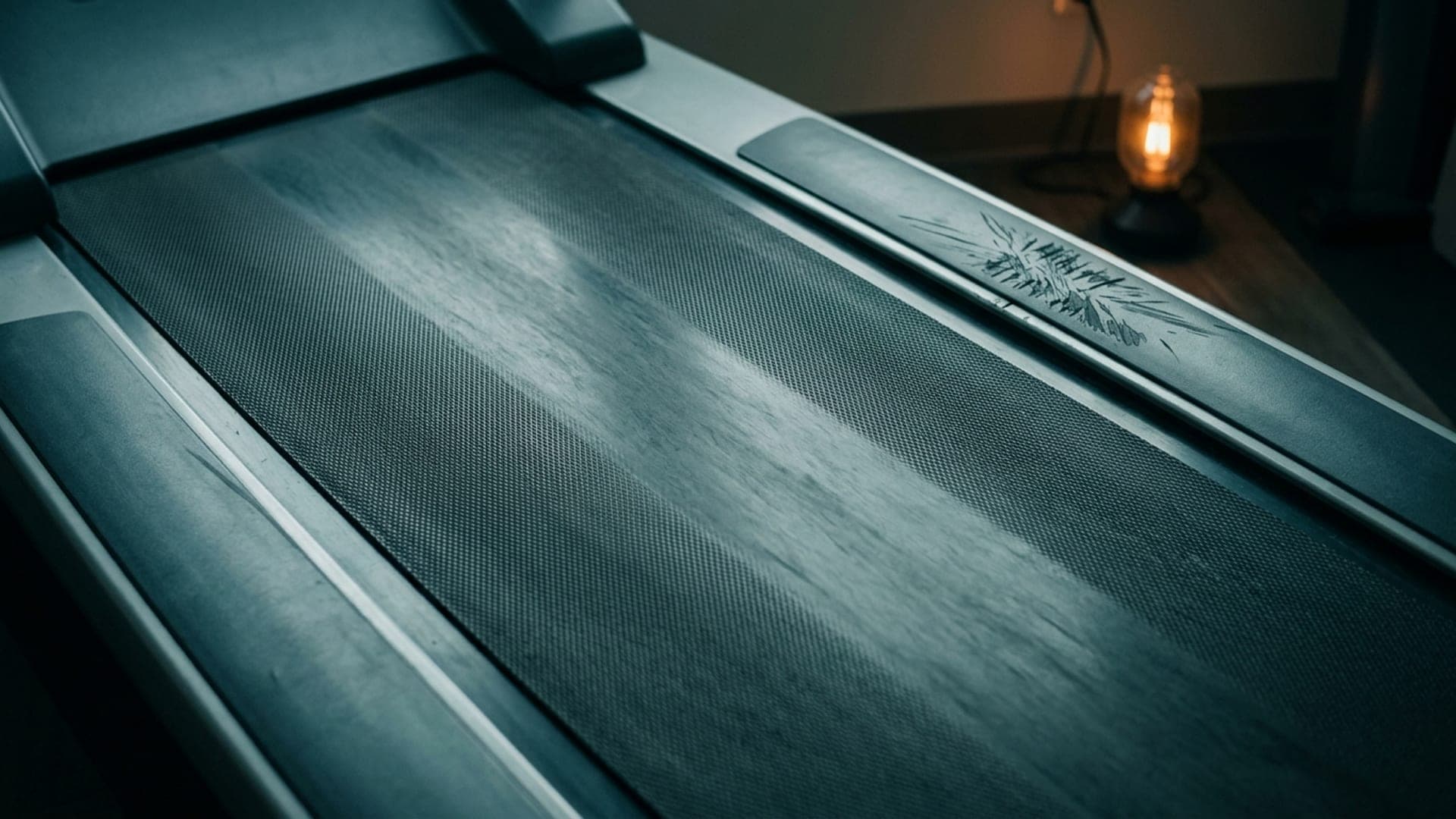
Under-desk treadmills have become popular among remote engineers, and the assessment is genuinely mixed rather than dismissive.
Claim | Assessment |
|---|---|
Replaces your daily walk | No — pad speeds are low-intensity and rarely reach the moderate threshold |
Breaks up sedentary blocks | Yes, and this is its strongest and least disputed use |
Adds meaningful step count | Yes, though see above about what step count measures |
Lets you work normally while walking | Partly — depends entirely on which task |
Improves focus | No good evidence either way |
Discharges the WHO aerobic recommendation | Not on its own, at typical pad speeds |
The second row is the real case for the device. Its value is not that it delivers your activity dose — it does not — but that it makes the long uninterrupted sedentary block harder to accumulate. That is a different benefit and a legitimate one, and it is worth buying on those terms rather than as a substitute for going outside.
Can you actually code while walking?
Mostly no, and the useful move is to stop asking the question in general and ask it per task.
Typing accuracy degrades while walking — you are stabilising a moving body and targeting small keys with the same motor system. Anything requiring precision suffers. So does anything requiring the kind of sustained focused attention that a novel physical task competes with.
But Meyer et al.'s instrumented data is a useful corrective on how much of the day this actually excludes. Coding was 21.0% of the workday. Collaborative activities were 24.4%, and work-related browsing another 11.4%. A large fraction of a developer's day is reading, listening and talking — and those survive walking perfectly well.
Walks well: calls where you are not sharing your screen, listening in meetings, reading documentation, reviewing a design doc, thinking about a problem before touching it
Walks badly: typing anything precise, debugging in an IDE, anything with a lot of pointer work, anything under time pressure
Walks surprisingly well: the deliberate thinking-about-a-problem phase, which many people find improves rather than degrades when moving
Not worth attempting: an incident, a live deploy, or a difficult conversation where you need to be fully present
The practical arrangement most people converge on is to keep the pad for the reading, listening and thinking parts of the day and step off it to write. That maps neatly onto the measured structure of the work rather than fighting it. XenGrowth on AI agents and marketing automation covers the AI agents and marketing automation side of this.
What remote work actually removed
It is worth being precise about why this became a question at all, because the answer explains why the fix has to be deliberate.
An office day contains a substantial amount of unplanned, unnoticed movement. Getting to the building, whatever that involves. Walking between meeting rooms. Going to find someone rather than messaging them. Leaving the building for lunch. None of it was exercise and none of it was intentional, but it accumulated to a meaningful daily total that nobody had to schedule or think about.
Remote work removes essentially all of it. The commute goes first and is usually the largest single component. Meetings stop involving movement between rooms and become a chair you do not leave. Lunch stops requiring a trip. What remains is a day in which it is entirely possible to travel less than fifty metres between waking and sleeping, which is a genuinely novel arrangement for a human body and not one anyone designed on purpose.
That framing matters because it changes the psychology. Someone who now walks for an hour a day is not adding an hour of exercise to a previously balanced life — they are replacing incidental movement that used to be free with deliberate movement that has to be scheduled. The total may be similar. What changed is that it now requires a decision every day, and decisions are the thing that fail on a bad week. XenGrowth on AI search, GEO and discovery works through AI search, GEO and discovery in more operational detail.
Which is the strongest argument for attaching the walk to something structural rather than to willpower — a fixed time, a dog, a habit of taking one call a day outside, a walk to buy lunch that reintroduces the trip remote work removed. The people who sustain this are almost never the ones relying on remembering.
A target worth using
Track minutes at moderate intensity rather than steps, if your device supports it. Most do, and it is the variable the guidelines are written in
Aim toward 45 to 60 minutes most days if you sit for eight or more. That is Ekelund's offsetting territory, and it is a walk rather than training
Split it freely. Three twenty-minute walks accumulate the same duration as one hour, and for most outcomes total volume appears to matter more than continuity
Use a pad for the sedentary-block problem, not the activity-dose problem. Those are two different things and only one of them needs a purchase
If you insist on a step target, pick something you will actually hit, and remember that its origin is a piece of 1960s branding rather than a threshold anyone discovered
If your day contains | Best use of a pad | Still need |
|---|---|---|
Many calls | Walk during the ones without screen sharing | The brisk walk, separately |
Long focused coding blocks | Step off to type; walk in the gaps | The brisk walk, separately |
Mostly reading and review | This is close to the ideal case | The brisk walk, separately |
Frequent interruptions already | Marginal — you are up and down anyway | The brisk walk, separately |
The right-hand column repeating is the point of the table. Nothing in this category of device removes the need for the thing that has a million-person study behind it, and the most common failure here is buying the pad and quietly retiring the walk.
This is general information about published guidelines and research, not medical advice. But the summary is fairly simple: measure intensity rather than steps, aim for the duration rather than the number, and treat the pad as a way of breaking up sitting rather than as a way of getting your exercise at the same time as your work.
Further reading from XenGrowth
The XenGrowth resource library — what you'll learn: how the commercial side of this work is run, across search, automation and revenue operations.
XenGrowth on AI agents and marketing automation — what you'll learn: how the teams who own AI agents and marketing automation plan and measure it.
XenGrowth on AI search, GEO and discovery — what you'll learn: how the teams who own AI search, GEO and discovery plan and measure it.
Where this work meets go-to-market
Working on steps, walking pads, and coding while walking inside a commercial team? XenGrowth's growth engineering practice publishes operator guides on the revenue side of this work.
One last practical note for anyone weighing the purchase. A pad that lives under a desk you rarely leave gets used; one that has to be dragged out and set up does not, and this is the single best predictor of whether the money was worth spending. The same is true of the walk itself: the version that survives is the one embedded in something you were going to do anyway, and the version that fails is the one competing for a slot at the end of a long day.
Neither observation is sophisticated, and both predict outcomes better than any argument about step counts does. That is worth remembering the next time this topic appears in your feed attached to a precise-sounding number: the number is almost always the least important part of the advice, and the logistics are almost always the part that decides whether anything happens at all.